
One year ago, the European Commission and the European Committee of the Regions launched the merged EU Local Councillors network. Today, with 3.200+ members and 1.800 local authorities on board, the network is not only connecting people but also proving that Europe’s future is being shaped in town halls, schoolyards, and even on bicycle trails.
On 10 April 2026, we celebrated the network’s first anniversary with a dedicated webinar. Local councillors took the central stage presenting their initiatives on the ground, highlighting how they communicate about Europe at local level through concrete initiatives with citizens, innovative formats involving the EUROPE DIRECT Centres and creative ideas to bring Europe closer to the citizens.
One idea reflected in each story shared during the event: Europe is present at the local level and local councillors are the ones keeping this energy alive. Their strong ties to local communities help them understand what matters to citizens and connect them with EU initiatives.
The EU Local Councillors Network brings members together to exchange ideas, learn from one another, and foster cross-regional collaboration.
To mark the 1stanniversary, the network hosted a showcase competition, where 11 councillors presented innovative, citizen-centred projects. under two categories:
Bridge Builders – initiatives linking local communities with the EU level
Citizen Engagement Champions – standout examples of public participation
The audience voted live to crown a winner in each category.
Bridge Builder winner project: pedalling across borders to bring people together
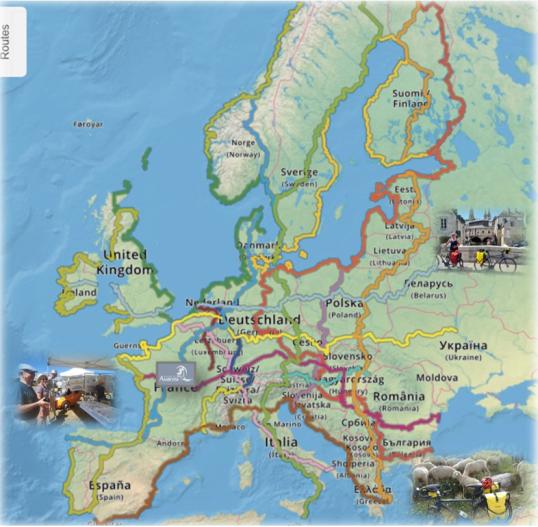
The winner, Sylvain Grevedon (France), turns cycling into a European movement. In collaboration with the regional EUROPE DIRECT Centre, he organised an exhibition on European cycling routes during a local event last June and launched Amboise’s first European Biking Day. Through the Futurium platform, he connected with network peers to explore cross-border cycling and social events. His next ambition? A 4.000-km, two-month solo journey from Trondheim, Norway, to Amboise next summer—an odyssey he hopes will include meetups with fellow network members along the route, with the proposed path soon shared on Futurium for potential detours and collaborations.
Other strong proposals in the same category:
- Todor Yosifov (Bulgaria): brought together entrepreneurs, local citizens and authorities to put EU economic models into practice on the ground. His motto is “Together we can!”
- Anastasia Argyropoulou (Greece): her "Act Inclusively" coalition - supported by the local EUROPE DIRECT - has schools, Scout groups, and the Red Cross working side by side for inclusion. “Treat inclusion and volunteering as part of local democracy, not as side activities.”
- Mojca Erjavec (Slovenia): organised a live watch of President von der Leyen’s SOTEU speech with students, followed by an open discussion on what is relevant for their community, following her principle “Bring Europe closer, one local event at a time!”
- Stefanie Schneider (Germany): sparked discussions on voting rights and how EU rules shape their daily lives with EU-Check, an interactive workshop that made European policies tangible for students. I was impressed by how students recognised the importance of Europe in their daily lives, "she shared. “Our role is important to make Europe even more visible”.
Citizen Engagement Champions winner project: a schoolyard in Europe thinks big
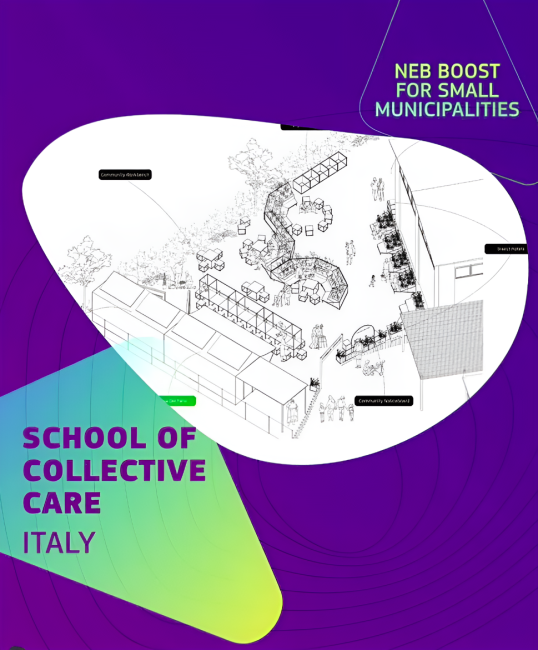
Fabio Bassini (Italy) won over the audience - and the 2025 New European Bauhaus Award - with School of Collective Care, a transformative project by the Municipality of Marcignago that reimagines a school garden as a multifunctional community hub, complete with outdoor classrooms, wellbeing paths, and shared spaces. Selected from over 300 entries as one of just 20 European winners, the initiative, developed in partnership with the University of Pavia and local stakeholders, was honoured at a ceremony in the European Parliament, where Marcignago secured €30,000 in funding and EU-wide recognition as a benchmark for small municipalities. The award underscores how beauty, sustainability, and inclusion can converge in local projects to enhance citizens’ lives while inspiring broader European innovation.
Other great projects in the same category included:
- Miina-Anniina Heiskanen (Finland) uses social media to tie local issues to EU debates. She played a pivotal role in shaping the events for Oulu’s year as European Capital of Culture 2026 and her video went viral last February. “I have followers all over Finland and Europe, who are interested to bring local issues into the “EU Table”
- José Miguel Pérez Blecua (Spain) organised a successful event to bring together women entrepreneurs from rural Spain, presenting the EULC Network to the community and encouraging newly elected women councillors to join the network. Additionally, his hometown-San Xoán de Río-was honoured in the European Capitals of Inclusion and Diversity Award for its commitment to accessibility, support for older residents, and addressing the challenges of rural life. His creed is “strengthening Europe in rural areas”.
- Ralf Frühwirt (Germany): With his creativity, he made the Europe Day celebrations deeply personal and closely tied to the local area : "My initiative to unite European cities beyond borders was born in 2024, I invited schools from France and Germany to exchange handwritten postcards featuring a student-designed 'European' motif. It was a wonderful experiment, and last year the project grew; these postcards, carrying reflections on our shared European identity, moved beyond schools and reached local markets and letterboxes of individual families!".
- Brahim Baalla (Italy): Believing that opportunities offered by the EU are often underused due to the lack of information, he started to publish relevant EU content on his municipality’s website, in particular information shared through the Info-flash updates (regularly provided by the EULC team). For example, he relayed the information for small businesses on the EU regulation introducing protection for Geographical Indications for craft and industrial products (such as ceramics, glass, leather, and textiles). The regulation safeguards against counterfeiting and ensures quality labels like ‘Made in Italy’. “Acting as a bridge between the EU and citizens is especially important for small municipalities like mine, where there’s a need for greater awareness at the local level” he noted in his presentation.
- Driss Zayou (Belgium): brings Europe to citizens in his municipality with monthly Pop-Up Europe happenings: “What I’ve done is help my citizens see their town through fresh eyes. For example, by showing them all the EU-co-financed infrastructure around them, like the sports fields where they take their children to play. They were thrilled!”
One year in, the message is clear: Europe isn’t built somewhere far away; councillors and their communities are the ones building it every day. Whether it’s by cycling across borders, turning schoolyards into community hubs, or sending postcards to every door, these projects prove that locally elected leaders are Europe’s best standard-bearer for democracy and citizen engagement.
- Publication date
- 28 April 2026
- Authors
- European Committee of the Regions | European Commission